



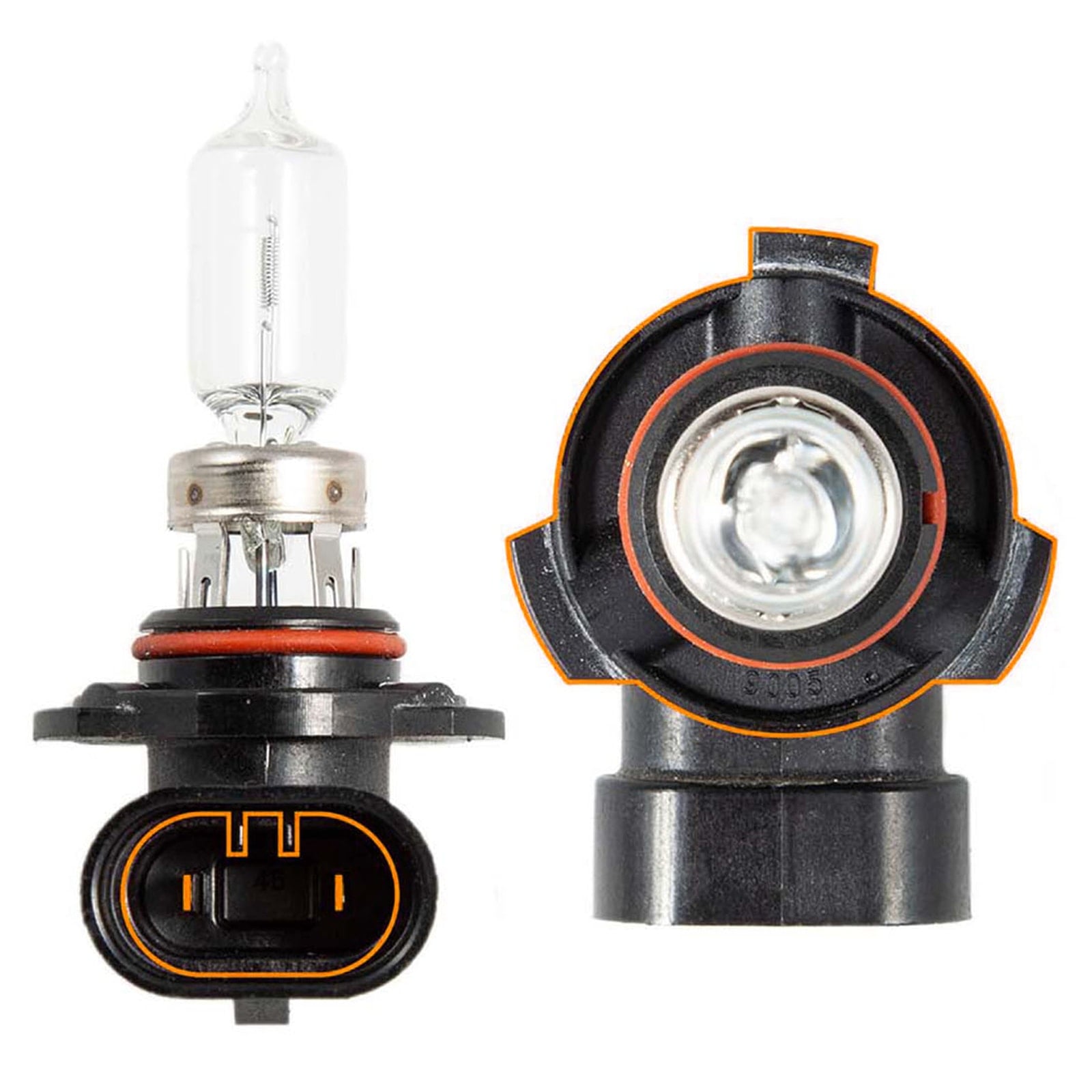
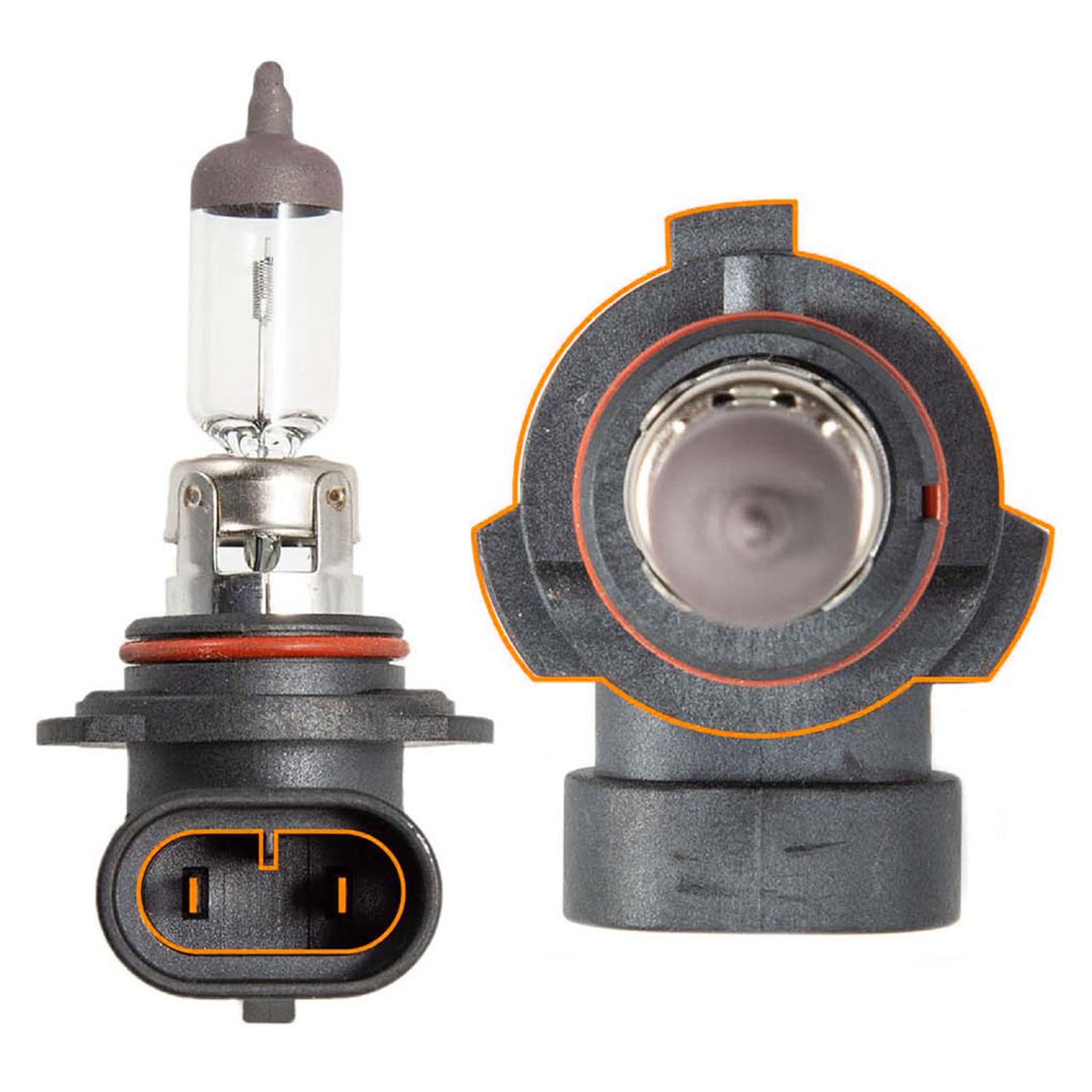
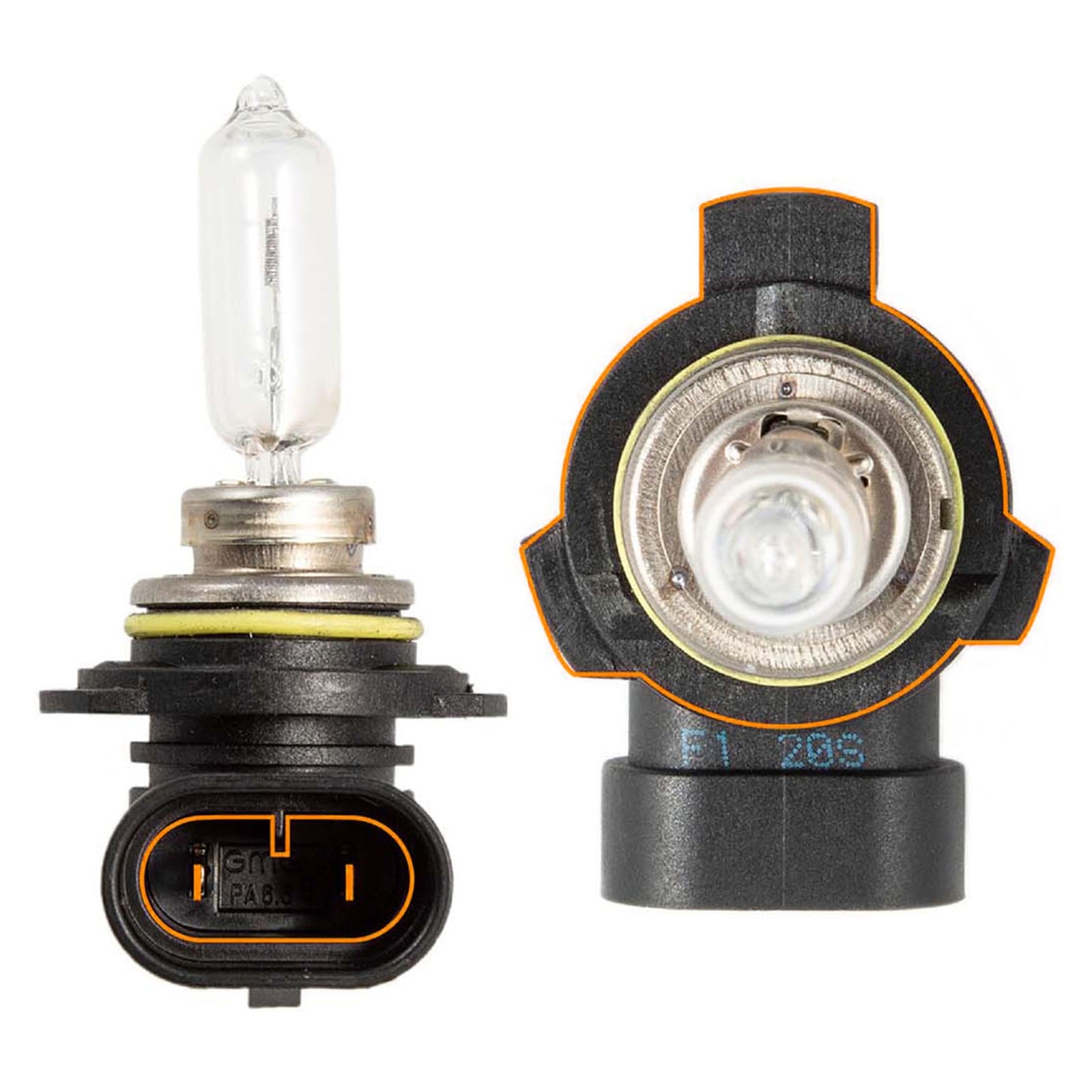
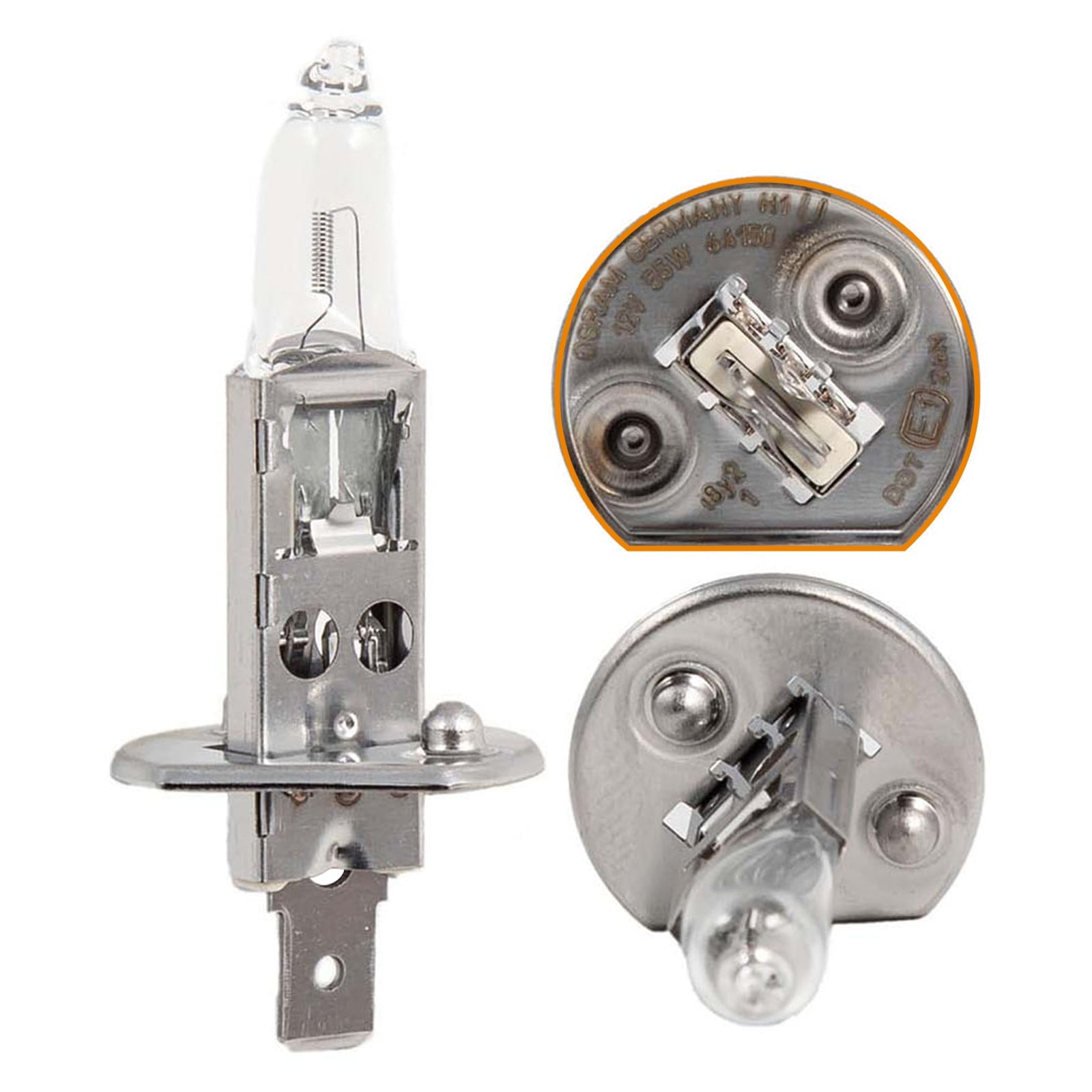
 S7S 9005 H11

 Track Order
 My Vehicles
 Contact Us
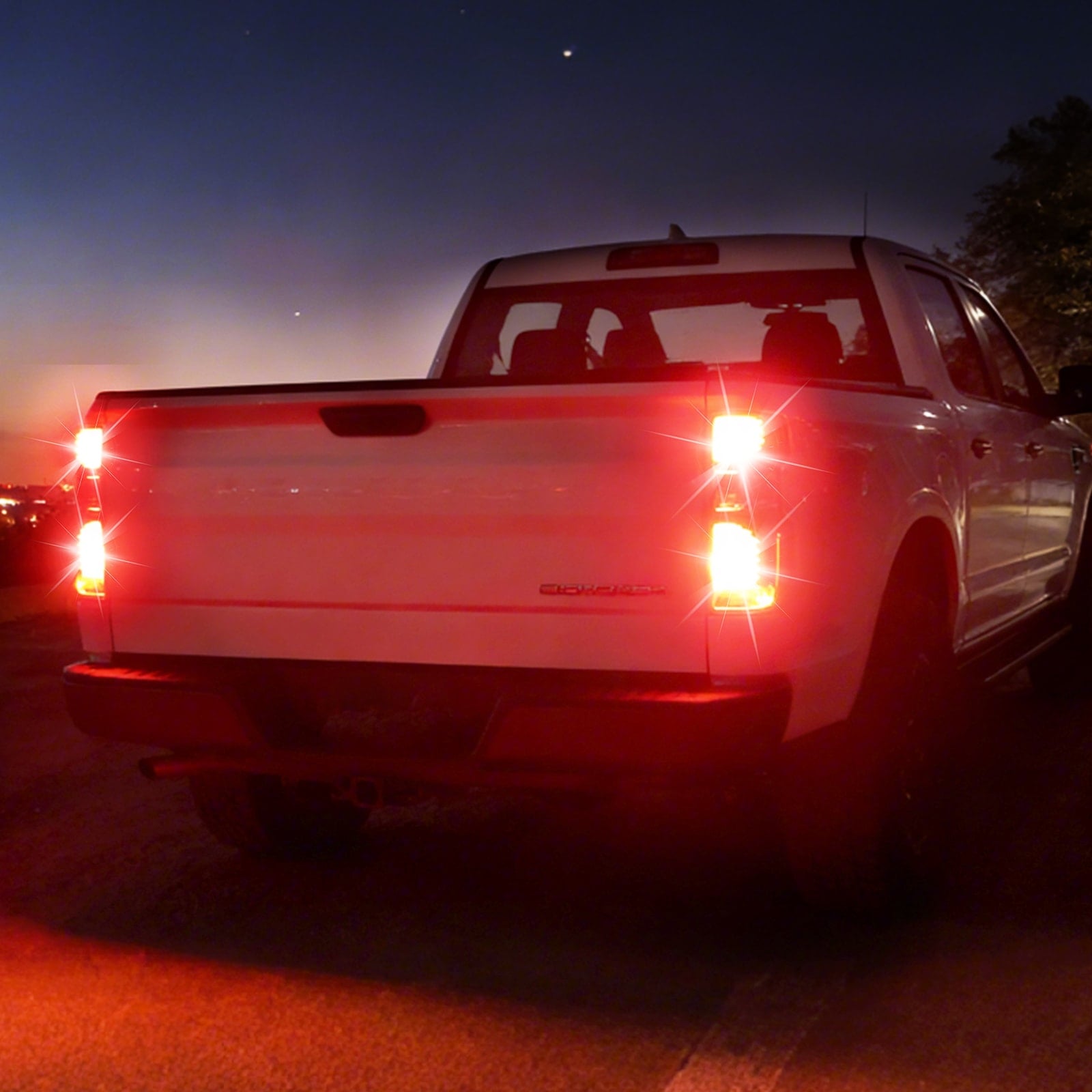
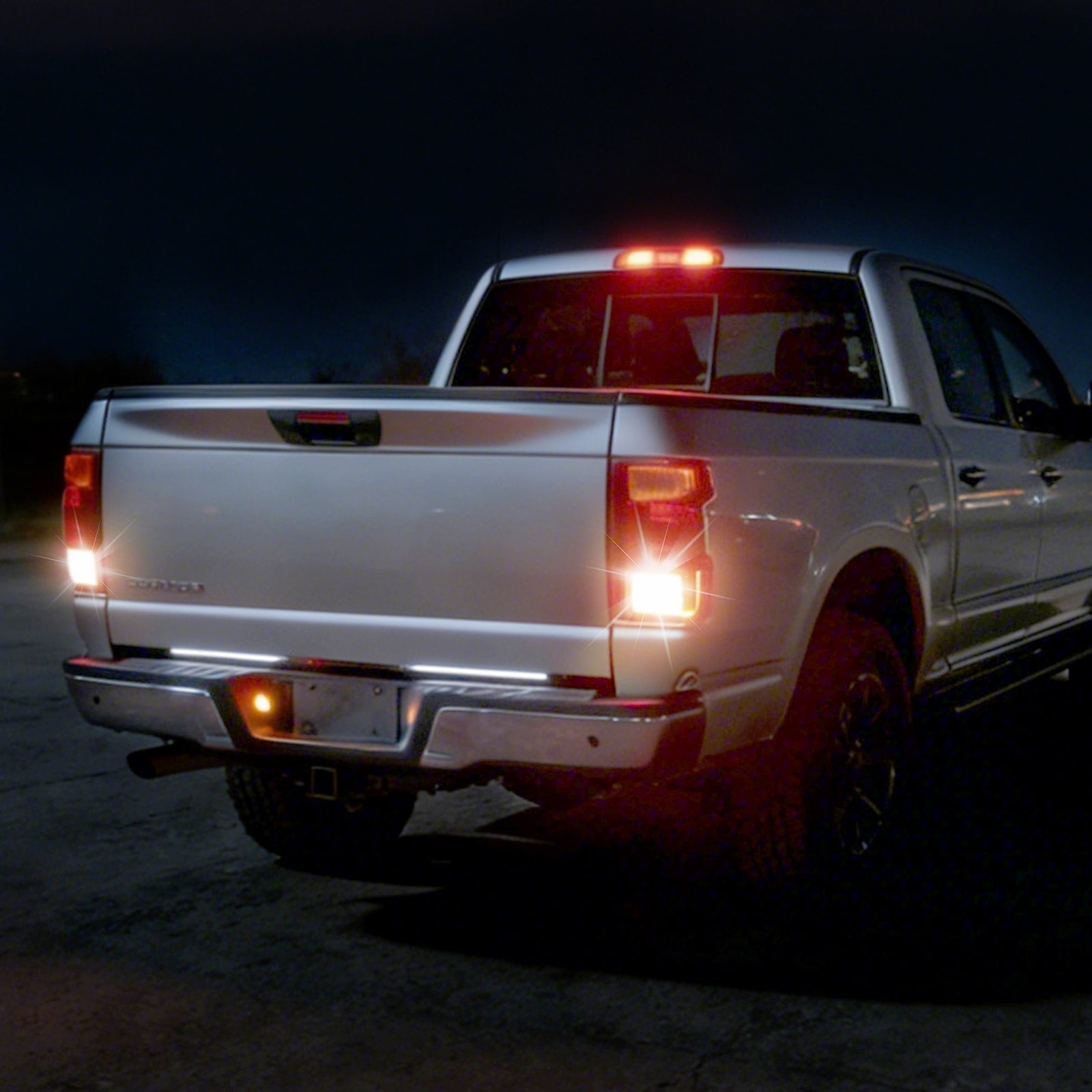
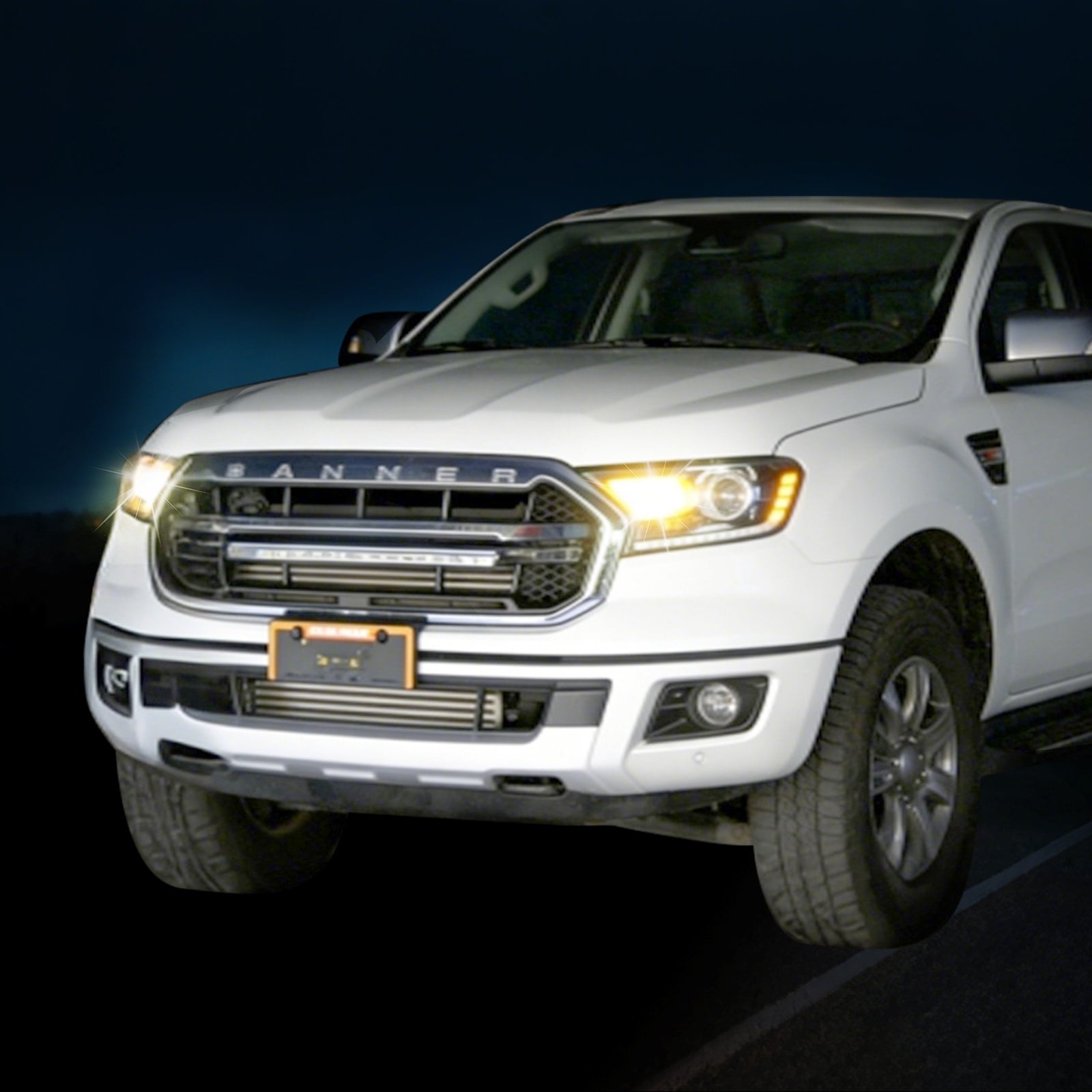
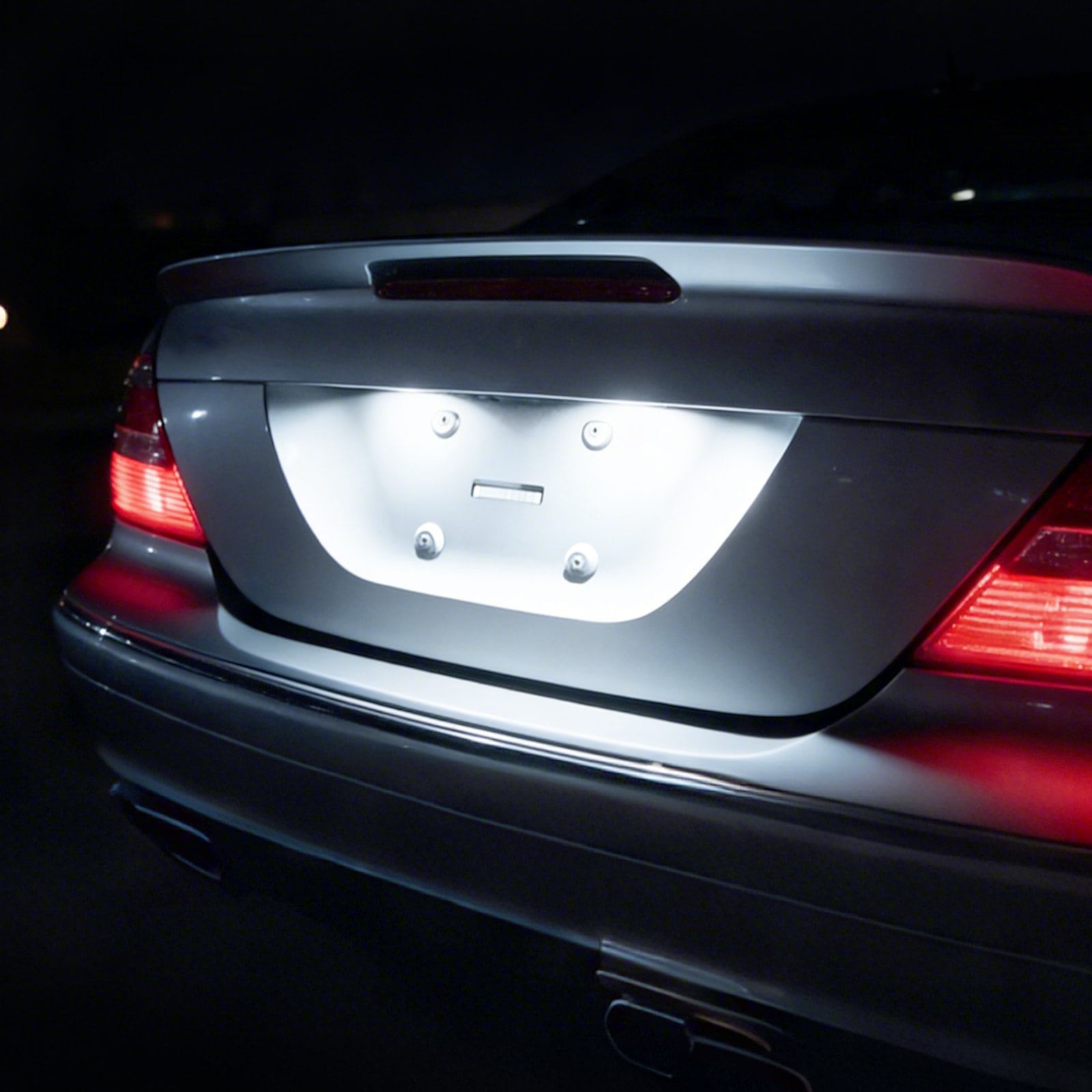





-69c35c81b5664.jpg)









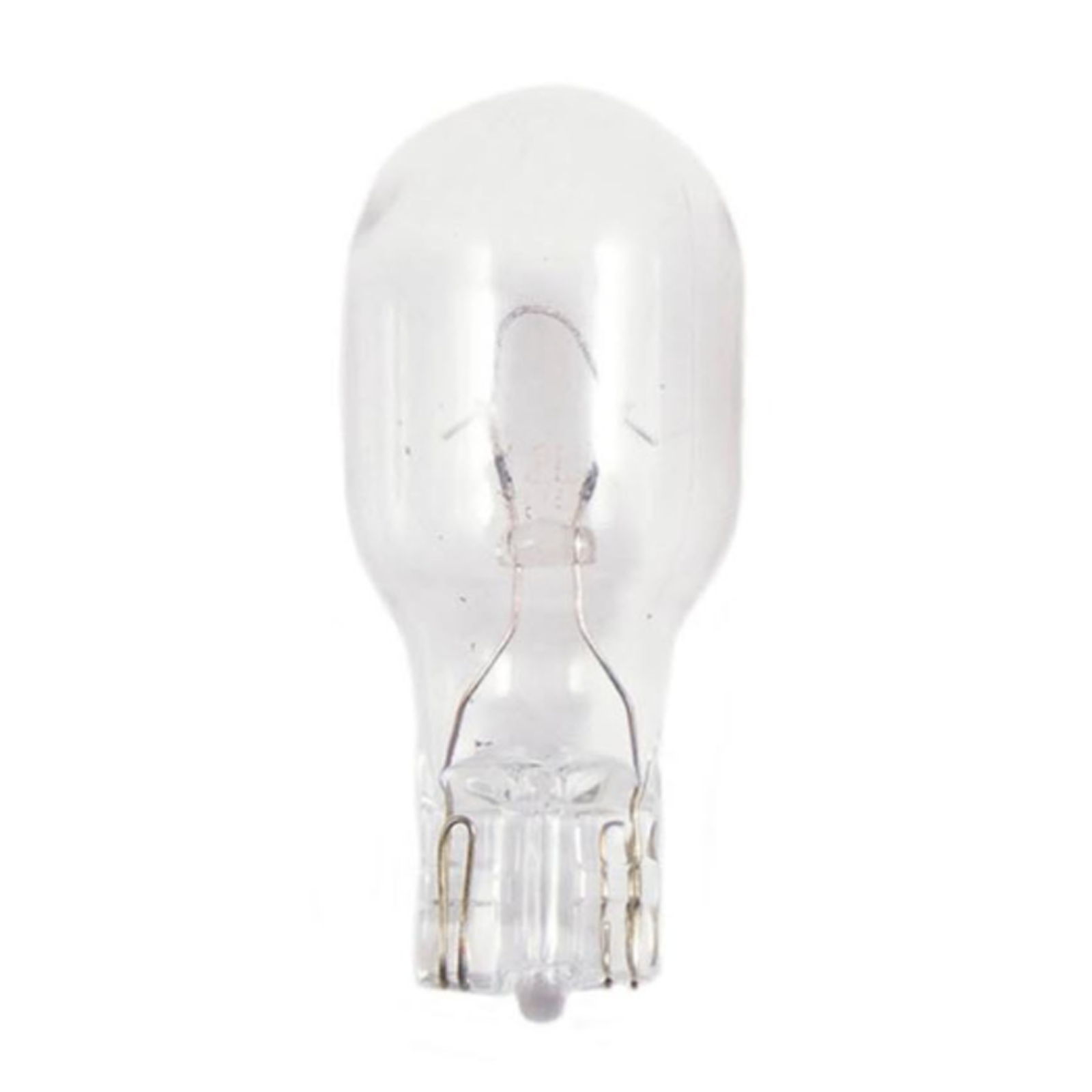
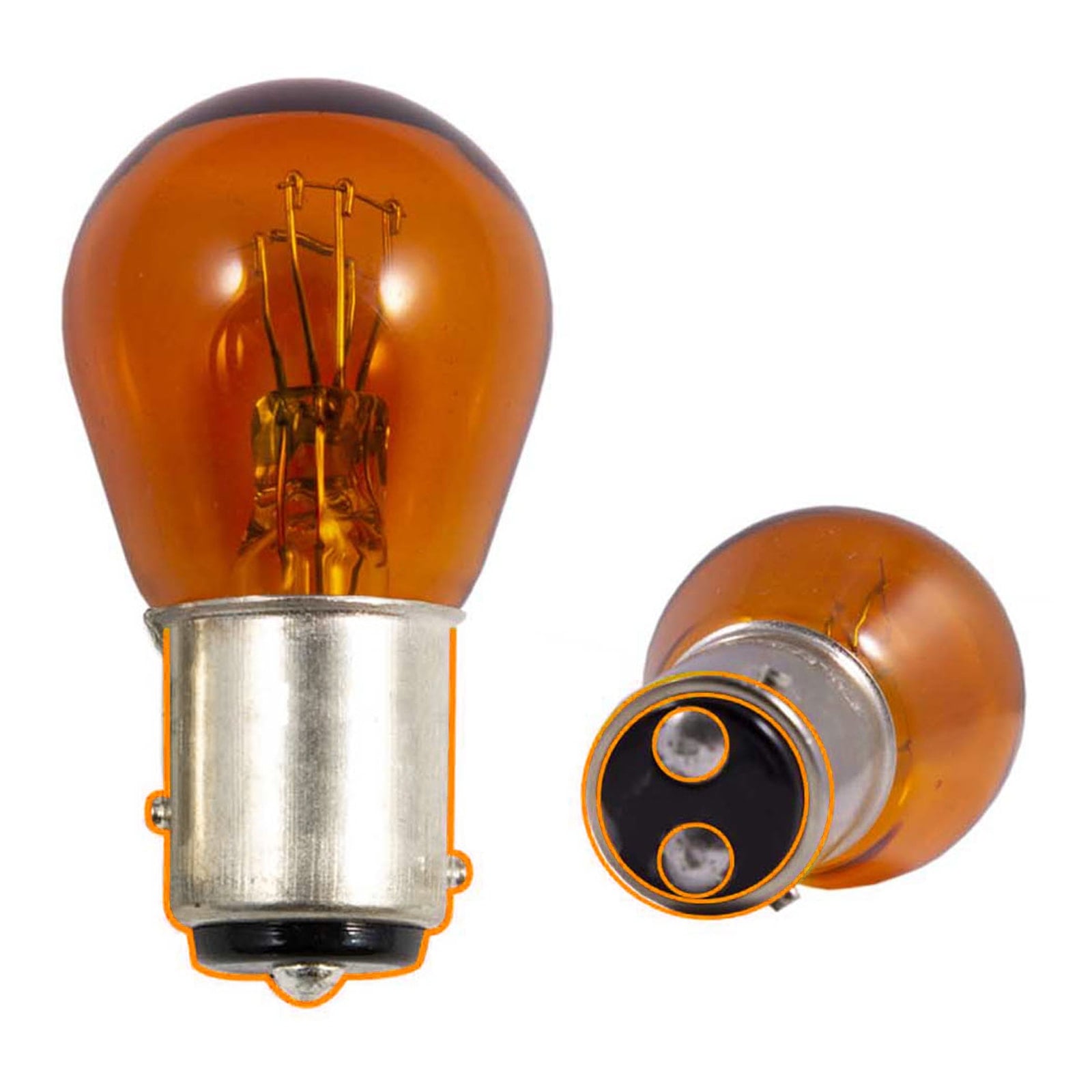
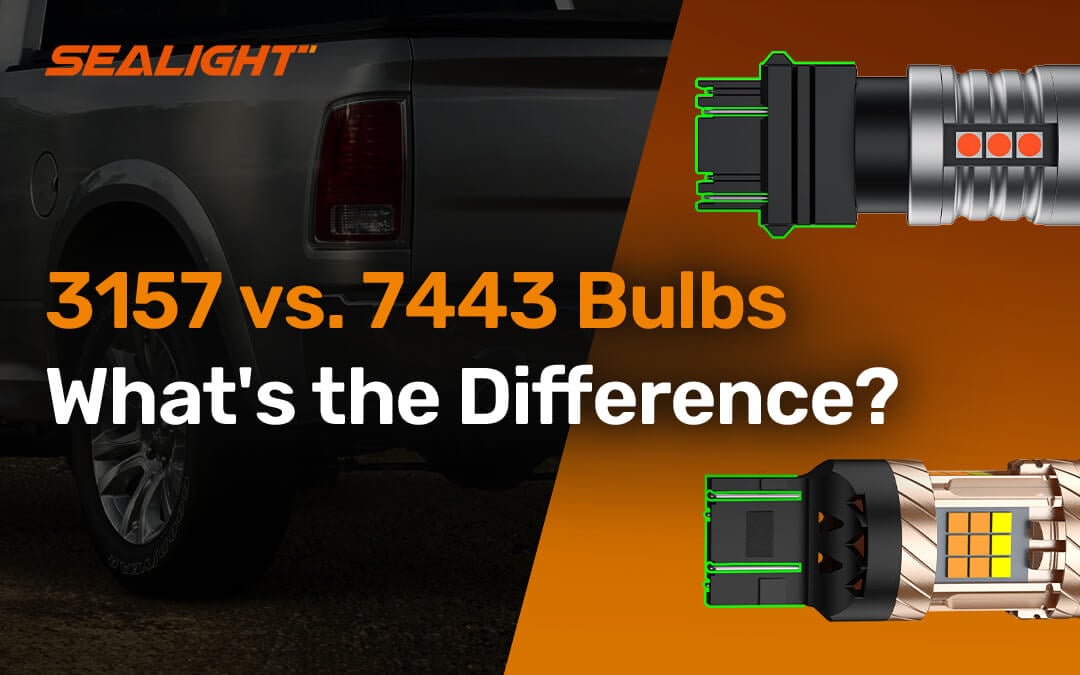
3157 and 7443 are common dual-intensity automotive bulbs used in brake, tail, parking, and turn-signal positions. They perform similar jobs, but they belong to different wedge-base families and should not be treated as direct replacements.
Quick Answer: 3157 vs 7443
- 3157 belongs to the larger T25-style wedge family.
- 7443 belongs to the T20-style wedge family.
- Both can provide low- and high-intensity output.
- The physical base dimensions and socket design differ.
- Vehicle-specific CK/SRCK wiring can further affect LED compatibility.
What Is a 3157 Bulb?
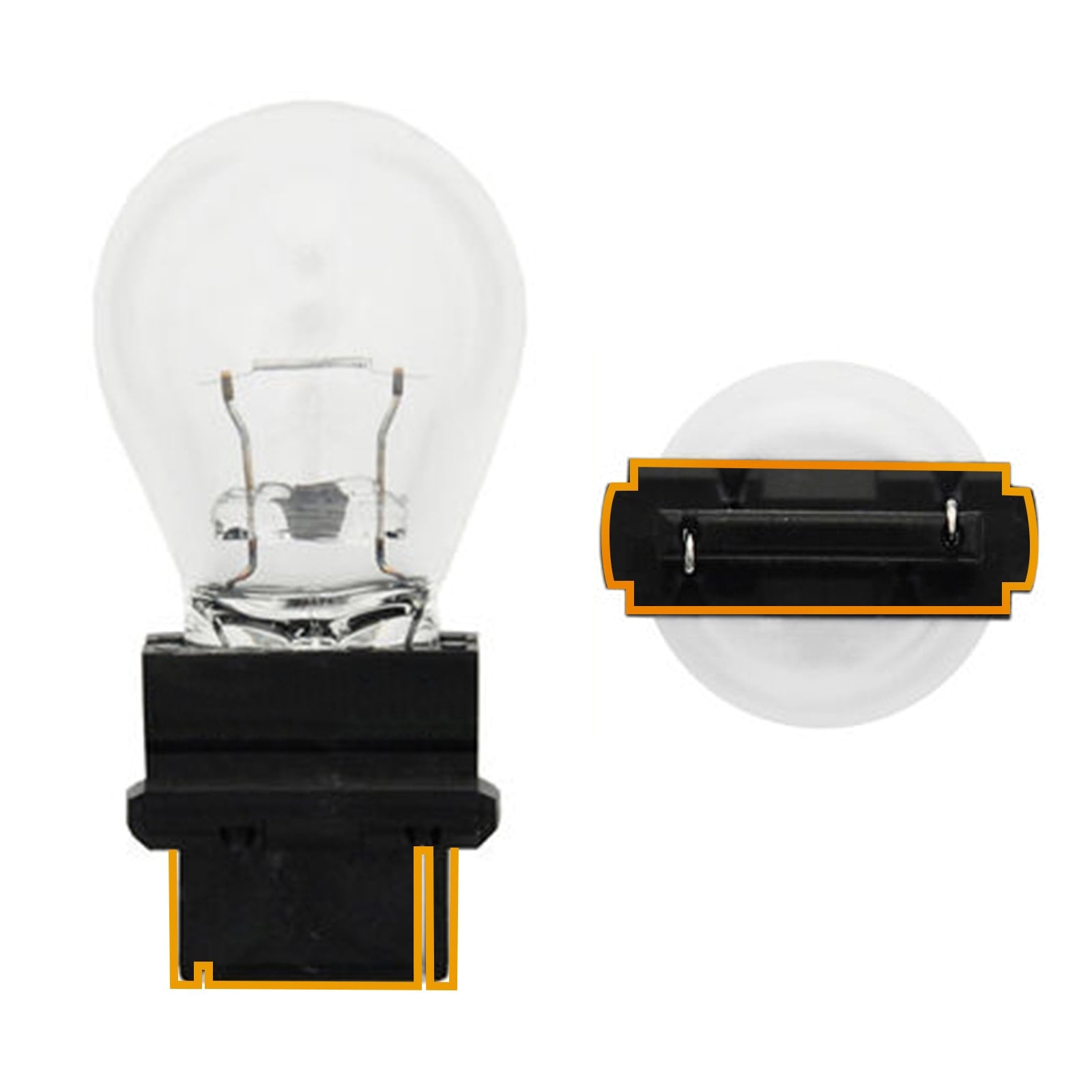
3157 is a dual-intensity wedge bulb widely used for brake/tail lights, turn signals, parking lights, and DRLs. It shares its family with 3156 and related cross-references.
Browse the 3156/3157 LED bulb collection for compatible applications.

What Is a 7443 Bulb?
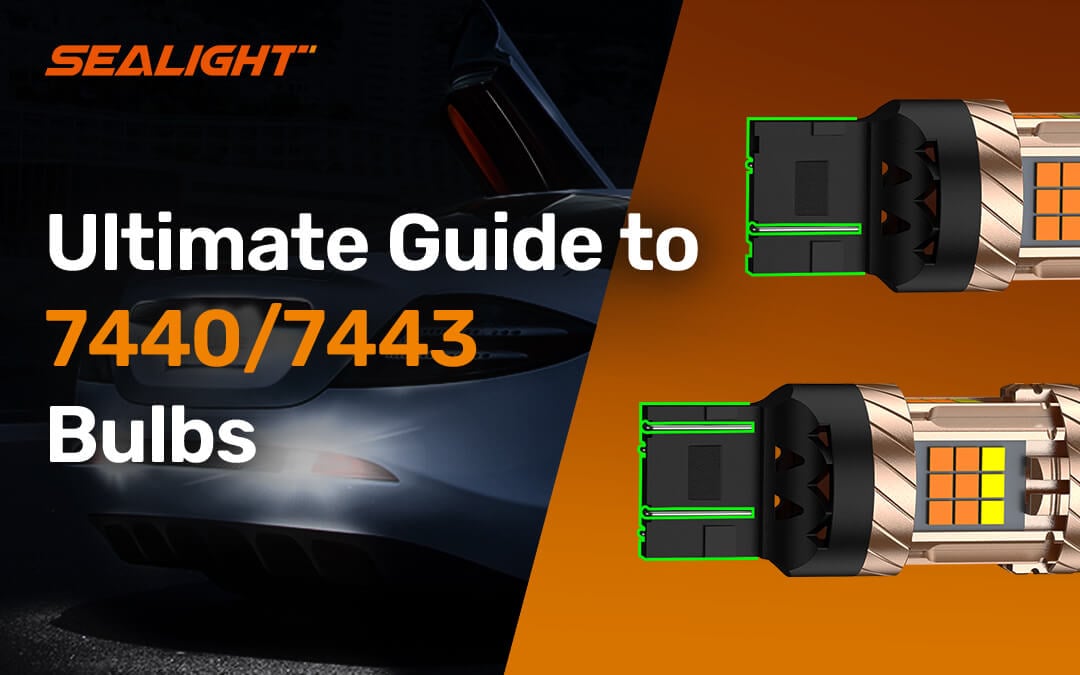
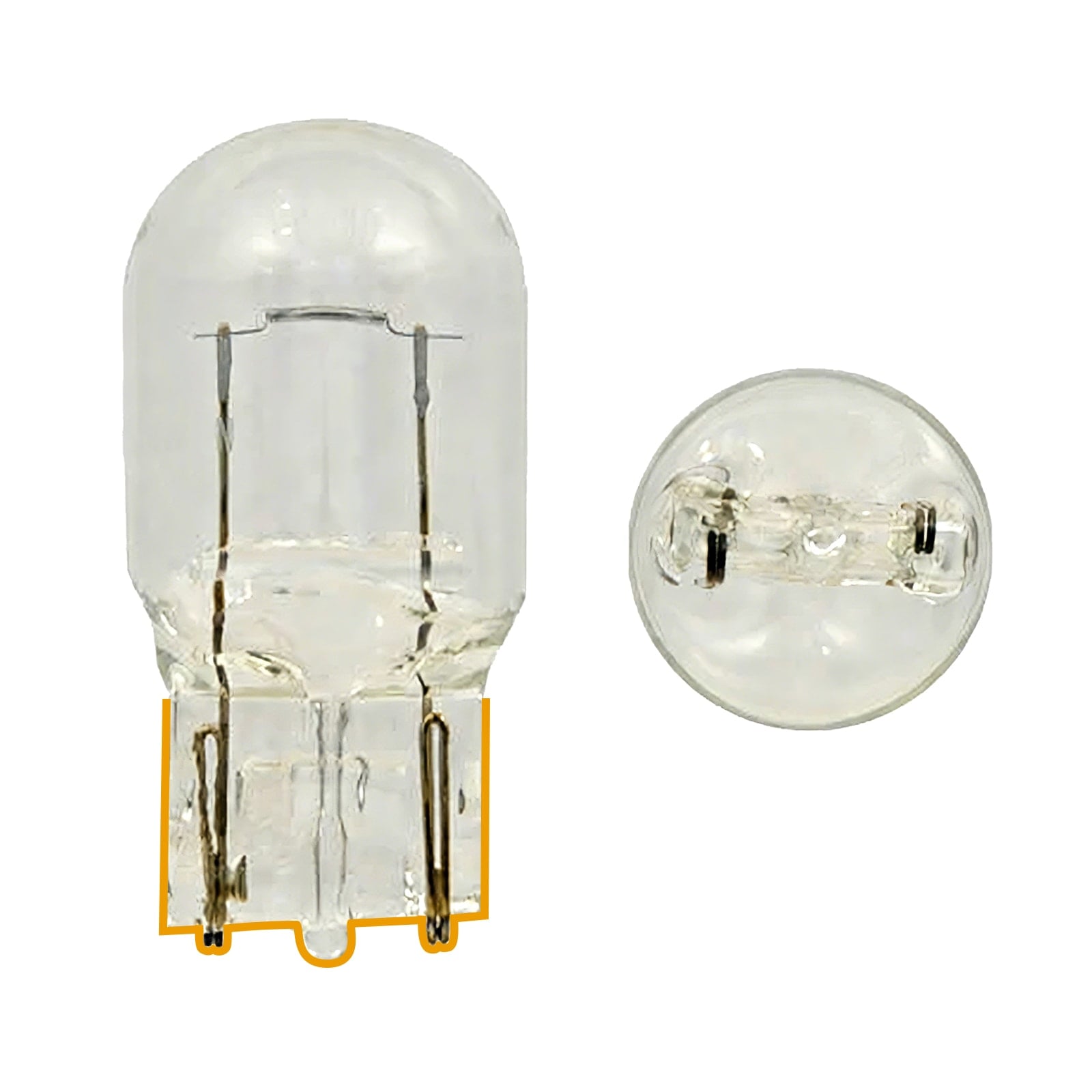
7443 is a dual-intensity T20-style wedge bulb commonly used for brake/tail lights, turn signals, and parking lamps. It is closely related to 7440, which is commonly single-function.
For matching applications, use the 7440/7443 LED bulb collection.

3157 vs 7443: Key Differences
Physical Size and Base
The two bulbs use different wedge dimensions. A 3157 socket is not the same as a 7443 socket, even when the bulb functions are similar.
Electrical Function
Both can provide two brightness levels, allowing one bulb to serve as tail/parking light at lower intensity and brake/turn signal at higher intensity.
CK/SRCK Variants
Some 3157-style applications use CK/SRCK contact layouts. An LED can fit physically but behave incorrectly if its internal wiring does not match the socket.
Are 3157 and 7443 Interchangeable?
No as a direct socket replacement. Match the original bulb family. If an aftermarket LED lists multiple cross-references, verify that the actual base and contact arrangement match your vehicle.
Common LED Upgrade Positions
For brake and tail lights, use the brake and tail light collection after confirming the bulb size. For turn signals, the turn signal light collection provides application-specific options.
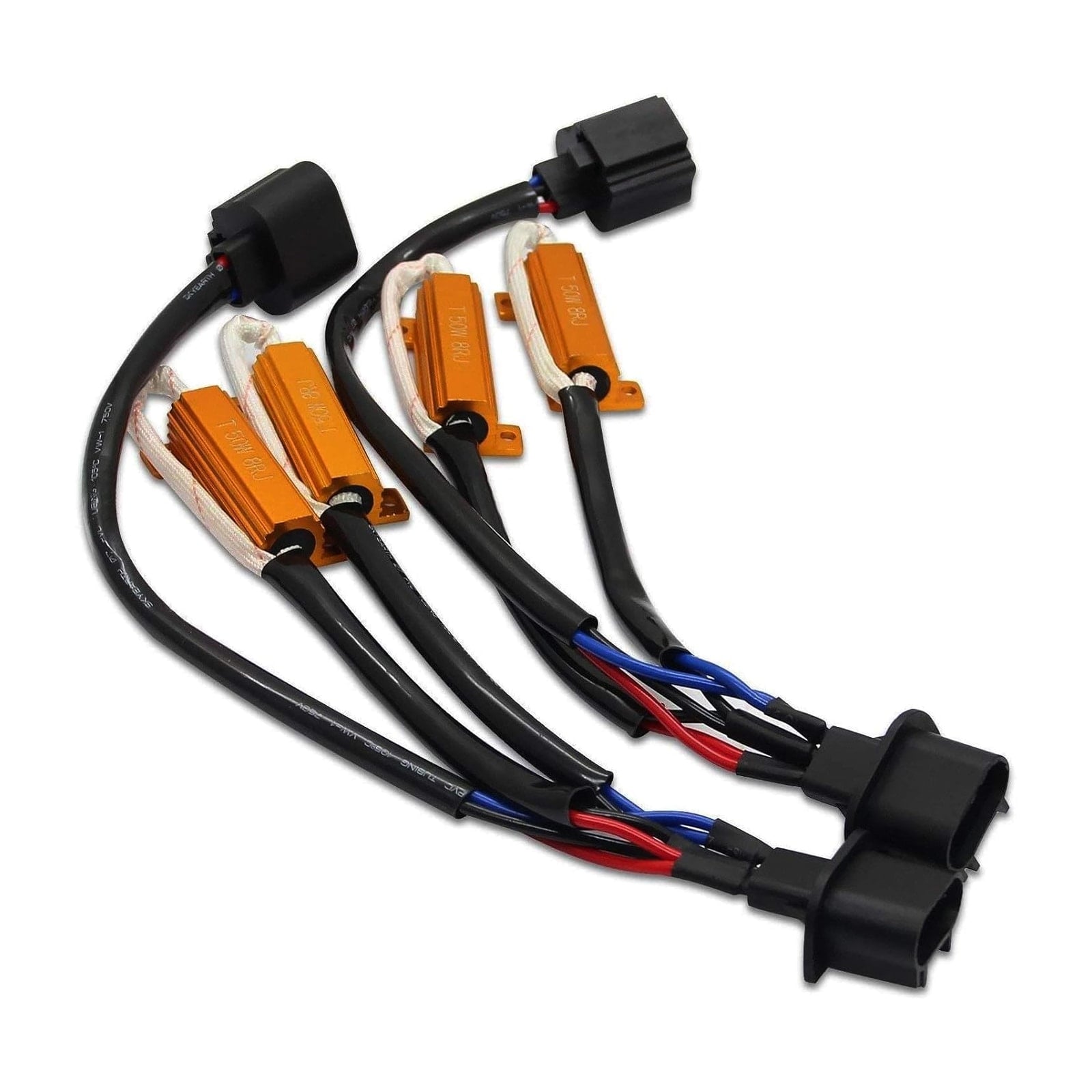
Turn-signal LEDs may cause hyper-flash on vehicles that expect the higher electrical load of an incandescent bulb. Use a compatible product or the appropriate load solution when required.
Installation Checklist
- Confirm 3157 or 7443 on the original bulb or vehicle fitment data.
- Check for CK/SRCK wiring when relevant.
- Match LED colour to the lighting function and lens.
- Test low and high intensity before reinstalling the lens.
- Confirm turn-signal flash rate after conversion.
Frequently Asked Questions
Can 3157 replace 7443?
No as a standard direct replacement because the bases differ.
Are both dual-intensity bulbs?
Yes, both are commonly dual-intensity designs, though the exact vehicle function depends on the socket.
Which one is used for brake lights?
Either can be used for brake/tail applications depending on the vehicle. Use the bulb specified by the manufacturer.
Final Verdict
3157 and 7443 may serve similar brake, tail, parking, or turn-signal functions, but they use different bulb bases and are not direct replacements for one another. Before upgrading, confirm the original bulb size, socket wiring, and required colour for your vehicle.
For Canadian drivers, SEALIGHT Canada offers dedicated 3156/3157 LED bulbs and 7440/7443 LED bulbs, making it easier to shop by the exact bulb family your vehicle requires. You can also browse by lighting position, including brake and tail lights and turn signal lights.